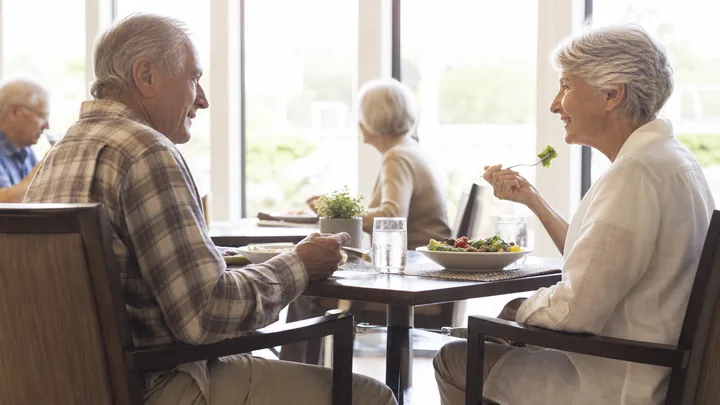
Ask residents what they would like more of and "eating outside" reliably makes the list. It is the single program that combines the two most powerful goods in this publication, the meal and the outdoors, into one event with a view. Ask operators why it rarely happens and the answers are equally reliable: it's a service nightmare, the wind takes the napkins, the sun takes the butter, half the residents can't manage the distance, and by the time the trays arrive the soup is cold. Both sides are right. Outdoor dining fails not because anyone opposes it but because it is treated as a nice day plus furniture, when it is actually a small logistics operation with weather exposure, requiring the same deliberate design as any meal service. Design it as an operation and it becomes routine; leave it to good intentions and it happens twice a summer, photographed both times.
Principle vs. proven
The component claims are established elsewhere in this publication: social meals support intake and wellbeing, outdoor time supports mood and rhythm (background at the National Institute on Aging), and proximity plus comfort govern outdoor use. That combining them multiplies their appeal is practitioner observation and common human experience. Restaurants did not invent the patio by accident. The operational patterns below are craft, not data. As throughout this hub: the audit at the end is how you find out what is true on your own campus.
Decide what it is: the three formats
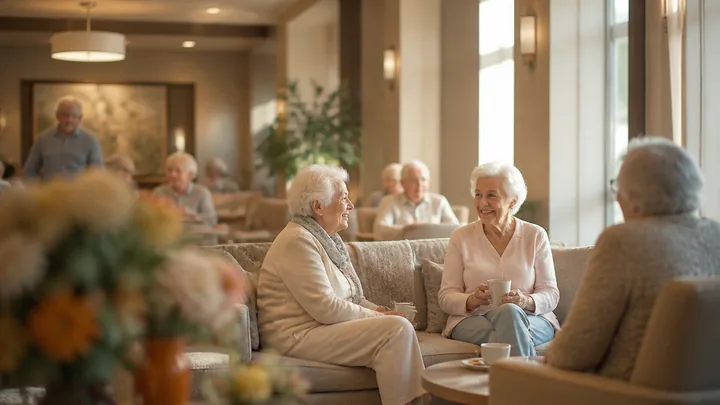
Outdoor dining fails first by ambiguity, so name the format. The outdoor meal service (a real seating of a real meal, plated and served outside) is the flagship: highest value, highest logistics, best run as a scheduled commitment (every fair-weather Wednesday lunch, say) so the kitchen can plan rather than improvise. The outdoor option, a handful of terrace tables served as overflow whenever weather permits, delivers autonomy (the couple who simply prefer eating outside) at modest cost, provided the service route works. The outdoor occasion (barbecue, ice-cream social, family picnic) is event programming with its own rhythm and forgiveness (nobody minds a paper plate at a barbecue). Communities that thrive outdoors usually run all three but promise only what staffing sustains, on the reliability logic of the second venue: a patio lunch that always happens beats a daily aspiration that usually doesn't.
Geography: the distance from the kitchen decides the menu
The controlling constraint is the service route: every yard between the servery and the table costs temperature, timing, and staff legs, and every door and threshold along it costs more (a server with a loaded tray meets the door problem at a run). The design answers, in order of power: put the dining terrace adjacent to the dining room, connected by a wide, flush, preferably held-open opening: adjacency converts outdoor dining from expedition to extra tables; give the route no stairs, no gravel, and no long detours; and where adjacency is impossible, change the food rather than fight the distance: cold menus, salads, sandwiches, the barbecue cooked on-site at the terrace itself, which turns the constraint into theater per the open-kitchen logic. A cart-friendly route (smooth, curb-free, door-automated) is the minimum viable infrastructure; a terrace the food cannot reach warm is a view, not a venue.
The table, weatherized
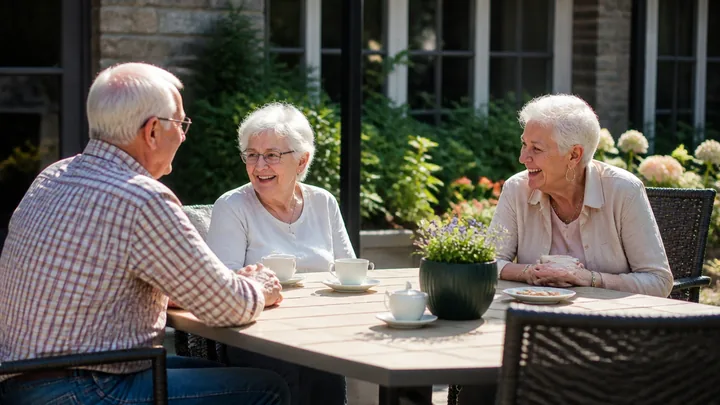
Outdoor furniture is where the program quietly excludes people. The requirements are the indoor ones plus weather: chairs with arms at rising-friendly heights (the sit-to-stand rules do not take summers off), stable on paving and heavy enough that wind doesn't walk them, in materials that neither scorch bare forearms in July nor stay wet an hour after rain; tables at wheelchair-compatible heights with bases that don't fight footrests, sized small per the assisted-dining geometry. Help happens outside too, and the corner seat must work there as well; and surfaces matte, because a white tabletop in full sun is a glare event that ends lunches. Add the small hardware that separates veterans from beginners: clips or weighted rings for cloths and napkins, lidded drinkware options for wind days, and a service station outside (water, condiments, tray landing) so every forgotten fork isn't a two-door round trip.
Weather management: comfort is the RSVP
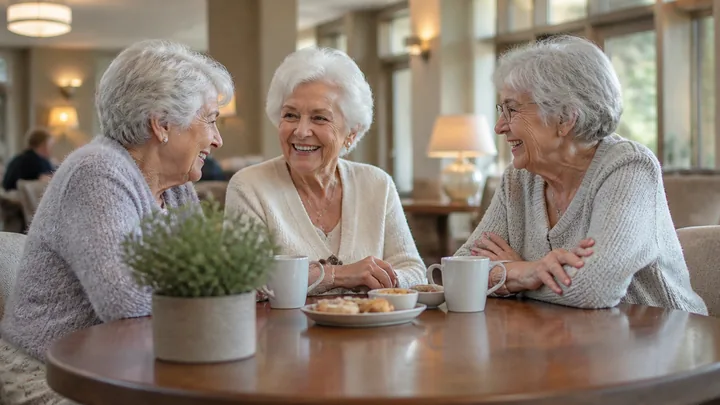
Attendance tracks the microclimate, not the calendar. The dining terrace wants the campus's best pocket: morning-to-midday sun with real shade at every table by noon (umbrellas are the weakest shade: first to glare, first to fly; pergolas, sails, and canopies hold the room together), wind screening on the prevailing side at seated height, and the sun's path checked at the actual meal hour: the terrace article's seated-eye discipline applied to lunch at twelve-thirty. Two extensions repay their cost: radiant heaters or the south wall's sun trap for shoulder-season lunches, and the covered porch as the rain-contingency venue, so "weather permitting" stops meaning "canceled by a cloud." Set an honest go/no-go convention (temperature and wind thresholds, decided by ten a.m., announced clearly) because residents plan their day around lunch, and a program that jerks them around teaches them not to sign up.
The residents the program forgets
Unmanaged, outdoor dining self-selects the fittest and quietly excludes the rest: the very residents for whom the sun and the change of scene do the most. Countermeasures: the terrace on the escorted-walk schedule (getting there is half the outing; the loop can end at lunch); seats held for wheelchair users at the tables, in the shade, not at a parking margin along the rail; the standing-tray list personally invited: an outdoor table is neutral ground with no room politics attached, and it has coaxed back diners the dining room could not; and memory care running its own version inside the secure garden, where the household's small scale and familiar staff make an outdoor table not a risk but the program working exactly as the sixth room intends.
Families: the program's multiplier
One constituency turns outdoor dining from amenity into strategy: visitors. Families who will not book the private dining room will absolutely join a barbecue, and a terrace table is the easiest hosting the building offers: grandchildren can be loud, spills land on paving, and the visit has a setting that photographs like life rather than like care. Reserve a share of outdoor-occasion capacity for family invitations, let residents host at the outdoor option with a day's notice, and note what it does to the tour: a terrace at lunch, occupied and noisy, is the most persuasive thirty seconds on the route. The program's costs sit in operations; a real fraction of its returns arrive through marketing.
The audit
Count last summer honestly: how many outdoor meal services actually ran, how many covers, who came, and who never did. Walk the service route with a loaded tray yourself, at pace. Sit at the worst table at twelve-thirty in July: sun, glare, wind, chair. Then price the gaps, which are usually canopy, furniture, a door operator, and a written weather convention: terrace money, not construction money. A campus that gets this program right earns something disproportionate to its cost: the meal residents describe to their families unprompted, which is to say the one doing exactly what shared meals are for.
Sources and scope
These primary and research sources anchor the subject area; they do not turn every design recommendation in this article into a proven outcome. Verify current law, adopted code, licensing rules, care plans, and clinical requirements for the specific property.